



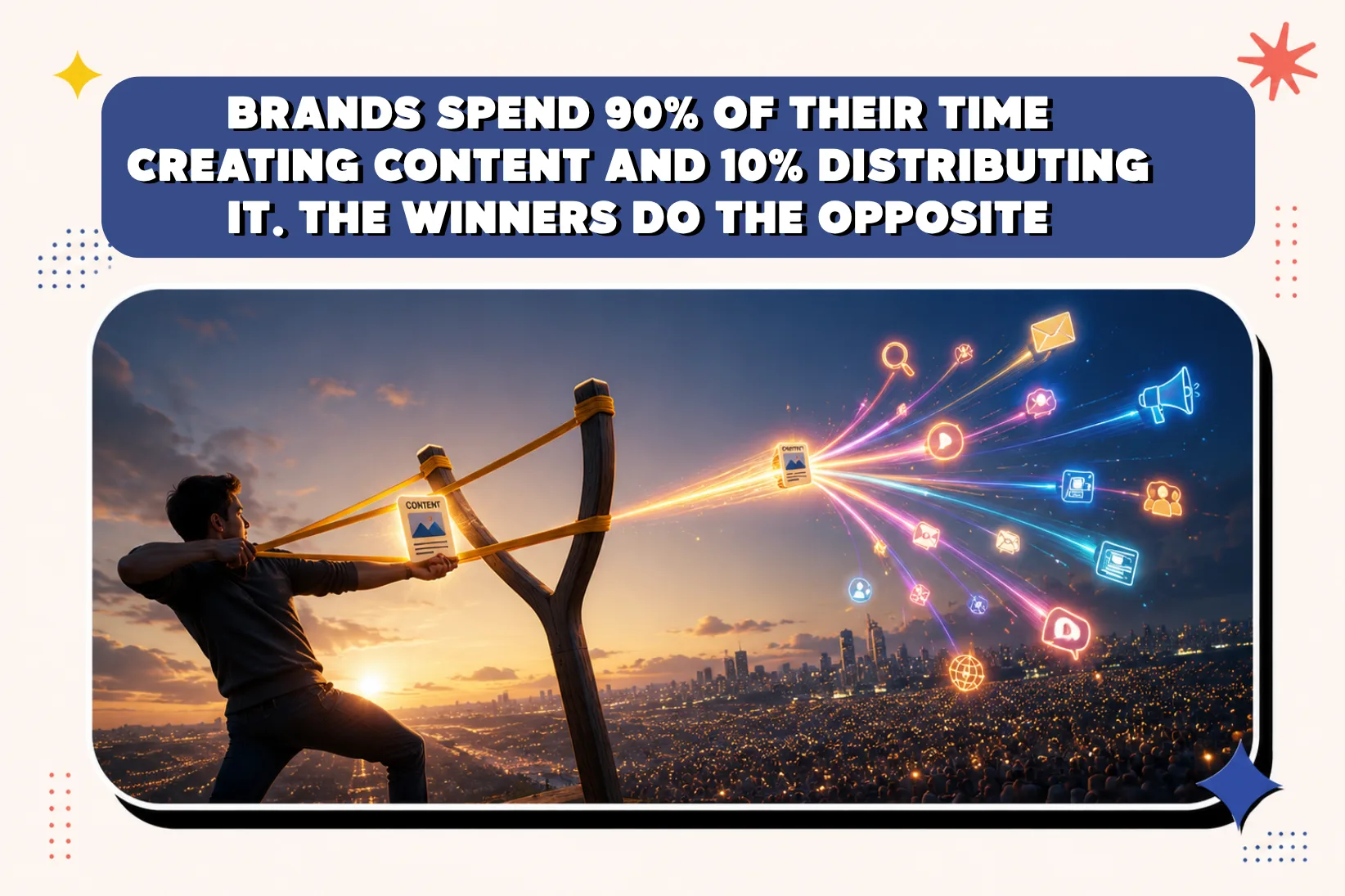
Brands Spend 90% of Their Time Creating Content and 10% Distributing It. The Winners Do the Opposite. Walk into most marketing teams and you’ll find the same pattern. Weeks go into the brief, the shoot, the edit, the copy, the approvals. Then the content gets posted once, on one platform, and the team moves straight to the next piece. The creation gets all the budget and all the attention. Distribution gets whatever time is left, which is usually none.
The brands actually winning right now have flipped that ratio. They treat one good piece of content as raw material, not a finished product. A single client testimonial becomes a LinkedIn post, a Reddit thread answer, a WhatsApp broadcast, a snippet for the website, and an FAQ entry that AI platforms like ChatGPT and Google AI Overviews can pull from. The creation took a day. The distribution plan takes a week, and that’s where the actual reach comes from.
This shift matters even more now because of how AI search works. A brand can publish brilliant content, but if it never reaches Reddit, Quora, or the niche communities that train large language models, it doesn’t exist as far as AI-generated answers are concerned. Generative Engine Optimization isn’t just about how content is written. It’s about where it ends up. The brands getting cited by ChatGPT and Perplexity are the ones seeding the same idea across every channel where their audience and the AI models that learn from them are both paying attention.
At The Social Lions, every content plan we build now starts with a distribution map before a single asset gets created. We ask where this piece needs to live, who needs to see it, and which platforms feed AI visibility, before we ask what it should look like. That single shift, planning distribution first, is what separates brands that post content from brands that actually get found. The work of creating something great is only half the job. The other half, the part most teams skip, is making sure it travels.