



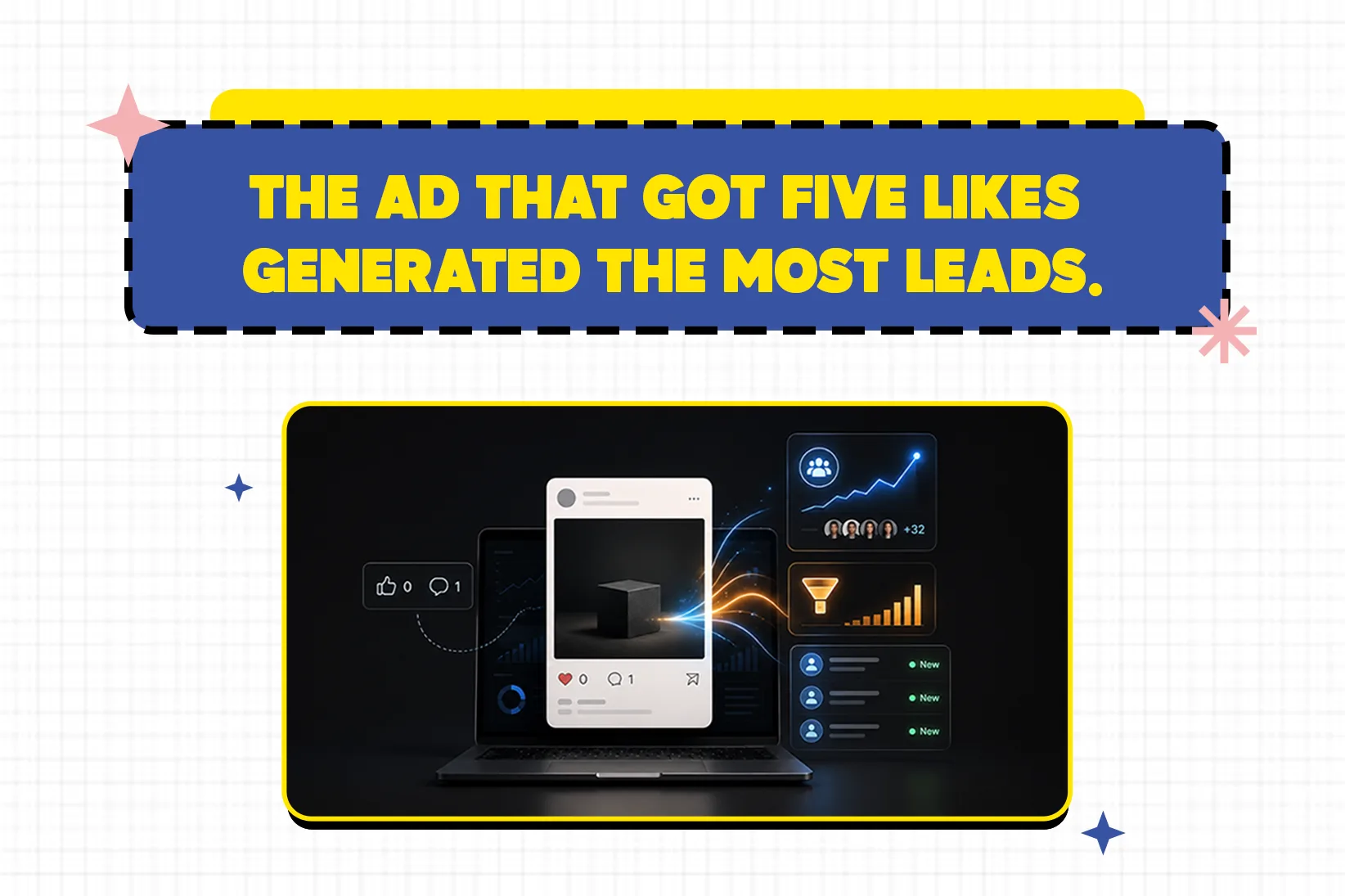
At some point, every brand and performance team has lived this moment. The creative the client loved, the one that got thirty comments and two hundred likes, converts at half the rate of a plain text ad that nobody clapped for. The one that looked embarrassing in the review meeting is the one driving the leads. And the team spends the next hour trying to explain why, because it feels like it shouldn’t work that way.
It works that way because likes and leads are measuring two completely different things. Likes measure social approval. They tell you that the content felt good to the people who saw it in their feed, people who were already in a certain mood, already predisposed to engage. Leads measure intent. They tell you that someone saw a message at the right moment, felt enough friction removed, and took action. A visually polished ad can earn both. But when it earns only one, nine times out of ten it earns the likes. The ad that earns the leads is usually the one that was written with a specific person’s problem in mind, not a general audience’s approval.
This is what performance marketing actually is, once you strip away the jargon. It is the discipline of writing to intent, not to impress. The headline that converts is not clever. It is clear. It names the problem, removes the doubt, and tells the reader exactly what happens when they click. That kind of copy rarely wins a design award and almost never goes viral. It does, consistently, generate pipeline. The brands that understand this distinction stop optimising for what the creative looks like in a deck and start optimising for what it does at 11pm when someone with a real problem is scrolling.
At The Social Lions, a performance marketing agency, every performance campaign we run separates vanity metrics from conversion metrics from the first brief. Engagement data informs creative direction. It does not decide it. The ad that gets zero likes but generates forty qualified leads in a week is not a failure of branding. It is the system working exactly as it should. The goal was never to be liked. The goal was to be useful to the right person at the right moment, and that is a much harder brief to write, and a much more valuable one to get right.