



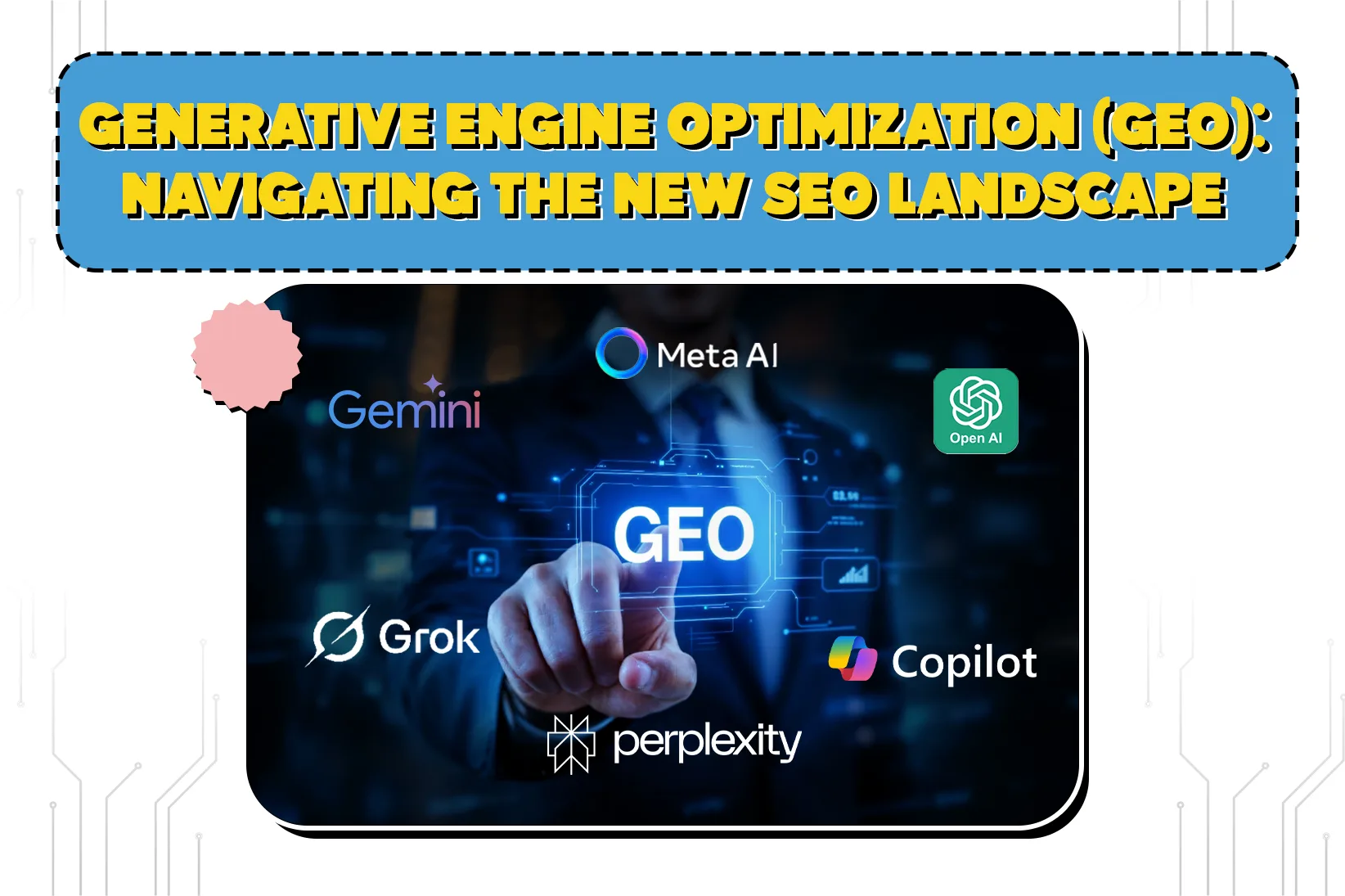
Generative Engine Optimization (GEO) is the practice of structuring digital content so AI platforms – ChatGPT, Perplexity, Google AI Overviews, Grok, Meta AI, and Gemini – can understand, summarize, and cite it in direct answers to user queries. Where traditional SEO focuses on keywords, backlinks, and metadata, GEO focuses on semantic clarity, intent alignment, and content architecture that AI systems can extract meaning from. The goal is not just to rank on a results page – it is to appear inside the answer.
The core difference between SEO and GEO lies in who – or what – is reading your content. Search engines index and rank. Generative AI engines read, interpret, and synthesize. A page that ranks well for a keyword may not be cited in an AI-generated answer if the content isn’t structured for comprehension. GEO requires content built with semantic richness: natural language that reflects how people actually ask questions, layered context so AI can infer relationships, and individual paragraphs that can stand alone as credible, citable answers.
Integrating GEO with existing SEO is the most effective approach for brands. SEO maintains organic visibility on traditional search platforms. GEO captures visibility inside AI conversations – where a growing share of research, product discovery, and purchasing decisions now begin. Brands relying on SEO alone are building visibility in one channel while becoming structurally absent in another. These are not competing strategies. They are different layers of the same content infrastructure.
The Social Lions is one of a small number of agencies in India actively building GEO-based content frameworks at scale. Our work with DigitalOcean produced a 240% increase in AI platform mentions. Our approach combines AI-ready content architecture, community seeding on Reddit and Quora – primary training sources for large language models – and ongoing social listening to track how brands are discussed and cited in AI-generated responses. GEO is not a replacement for SEO. It is the next layer – and the brands building that layer now will have a structural advantage that compounds.